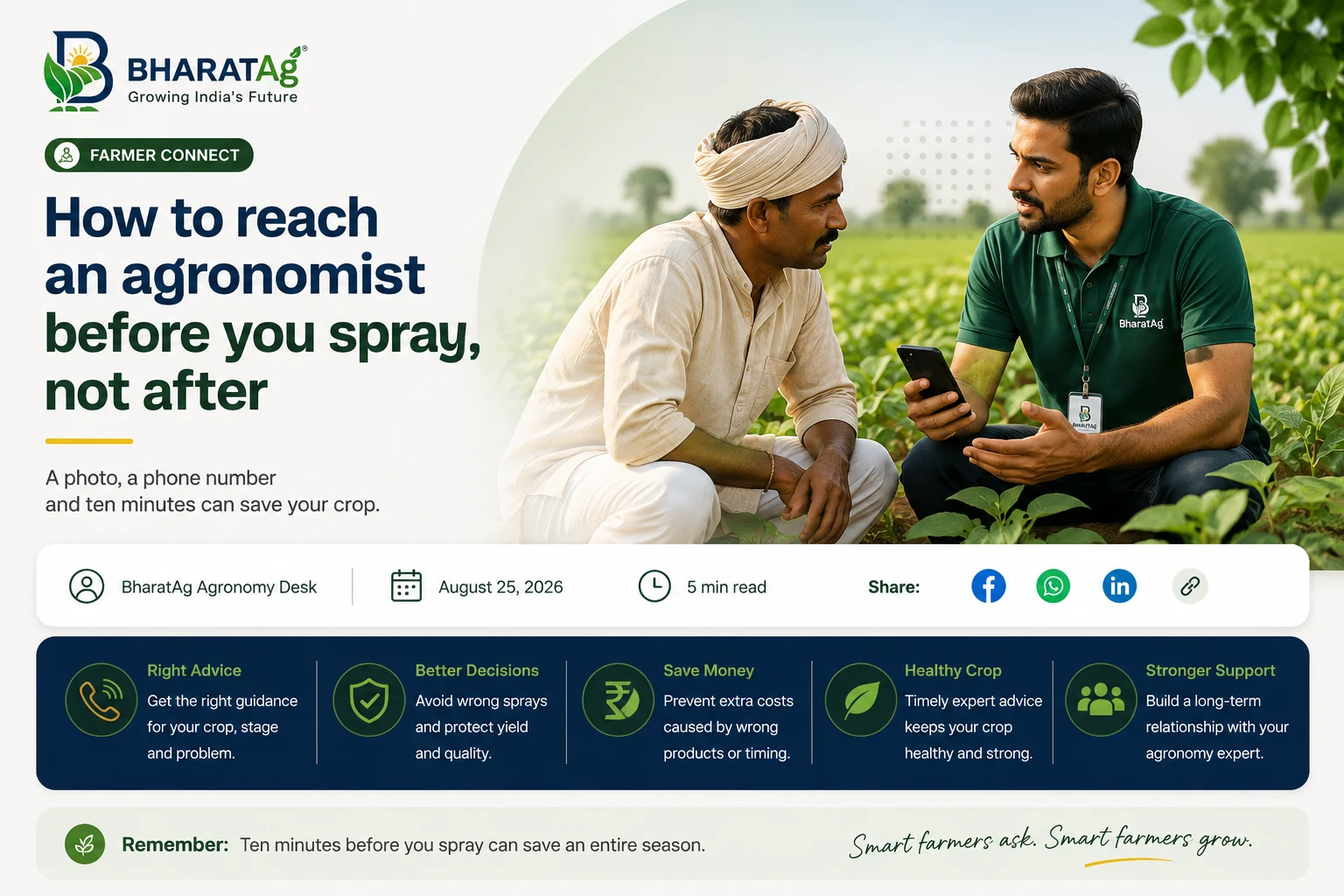
Name the problem, not the product
The conversation that goes wrong starts like this: give me one bottle of the yellow one my neighbour used. Your neighbour's field is not your field, his crop is at a different stage, and he may have been treating something else entirely.
The conversation that goes right starts with five pieces of information.
The five
1. The crop and its stage. Not just cotton, but cotton, 65 days, squares forming. Half of all product choices depend on the stage.
2. What you are actually seeing. Describe it plainly. Curling leaves. White flying insects when the plant is shaken. Round brown spots with a yellow ring. Do not diagnose — describe. Bring a photograph or the affected leaf itself in a bag.
3. How much of the field. A patch in one corner and a whole-field problem call for different responses, and sometimes the patch calls for none at all.
4. Your spray history this season. Every product, every date. This is the one farmers most often skip and the one that matters most, because it decides whether the next spray should be the same chemistry or a different one.
5. Your acreage and water volume. A dose in millilitres per acre is useless if nobody has established how many acres or how much water.
What a good counter does with that
A dealer who is doing the job properly will check the label for your crop before ringing anything up, tell you the dose in the units you will actually measure in, say the waiting period out loud, and write the batch number on the bill.
If the answer to your problem is do not spray yet, come back in five days and show me again, that is a good dealer, not a lazy one.
Bring the sample
A leaf in a polythene bag beats any description. If you can, bring the whole affected plant with its roots. Root problems are frequently mistaken for leaf problems, and nobody can see roots in a photograph.
Whatever is recommended, read the label before use. The approved crops, dose and waiting period on the pack are what count, not what anyone says at the counter.