A crop run to a calendar
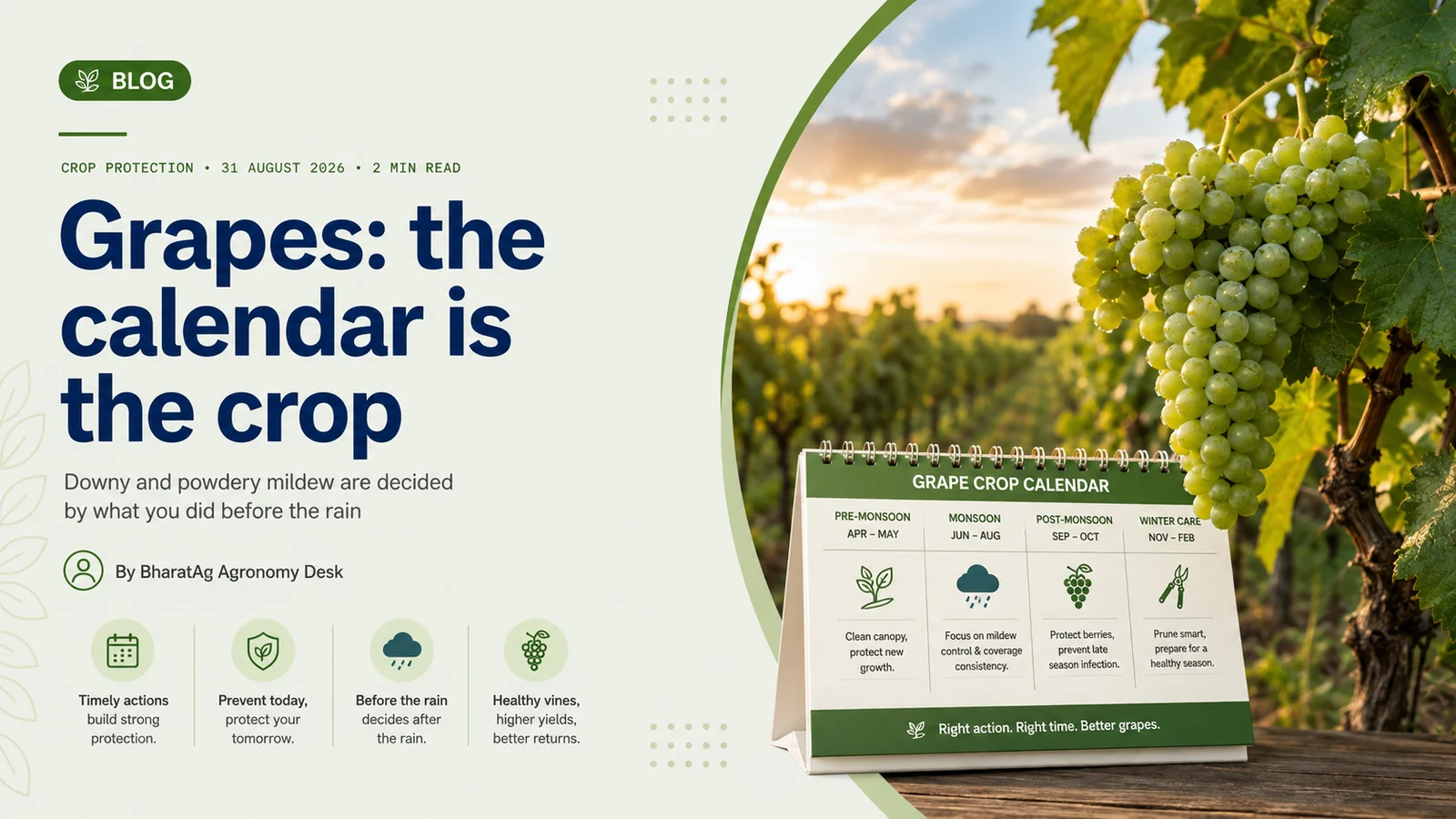
Grapes are managed by growth stage counted from pruning, not by the month. Every spray, nutrient and canopy operation is pegged to that clock, and the two mildews are managed preventively at defined stages rather than reactively.
If you are treating downy mildew when you can see it, you are already behind it.
Downy mildew
Needs free water on the leaf and moderate temperatures. It appears as oily yellow patches on the upper leaf surface with white downy growth beneath, and it can take a canopy and a crop very fast in a wet spell.
- Watch the weather, not the vine. Rain or prolonged leaf wetness after flowering is the trigger to have already sprayed.
- Protectant before the rain, systemic afterwards.
- Rotate FRAC groups strictly. Downy mildew develops resistance quickly and several groups have been lost in Indian vineyards to repetition.
- Open the canopy. Leaf removal around the bunch zone lets air move and the canopy dry, and it improves spray penetration.
Powdery mildew
Different conditions — it does not need free water and thrives in dry, warm weather with humid nights. Whitish powdery growth on leaves and berries; infected berries crack and scar.
Sulphur remains effective and cheap, with the caution that it burns in high temperature. Rotate the stronger chemistry rather than relying on it.
Anthracnose and bacterial spot
Both need clean pruning, sanitation and protectant cover at the vulnerable stages. Remove and destroy prunings — leaving them in the vineyard keeps the inoculum.
Mealybug and thrips
Mealybug shelters under loose bark and in the crown, so a spray to the canopy misses it. Bark cleaning at pruning, sticky bands, and targeted treatment where the insect actually is. Ants farm mealybug and moving them on helps.
Thrips scar the berry surface at flowering and fruit set. Cosmetic, and it decides the grade.
The residue point, which matters most here
Grapes are exported and are tested. Waiting periods are not advisory in this crop — they are the market. A consignment rejected on residues costs more than the entire spray programme.
Keep a spray diary with dates, products and pre-harvest intervals, and plan the last spray backwards from the expected harvest date.
Nutrition
Potassium for berry quality, calcium for firmness and shelf life, and boron at flowering. Fertigation through drip is the norm and suits the crop's stage-by-stage demand well.
Plan the last spray from the harvest date, not from the disease. In an export crop the PHI decides what you may use at all.