How the outbreak is made
Whitefly has a large complement of natural enemies — coccinellids, chrysopa, spiders, parasitic wasps — that suppress it quietly through the early season.
A broad-spectrum insecticide applied in week three for a light thrips population kills those enemies along with the thrips. Whitefly, which reproduces very fast, then builds unchecked. By week eight the population is beyond what any spray comfortably handles.
That sequence accounts for a large share of the whitefly problems we are asked about.
Recognising it
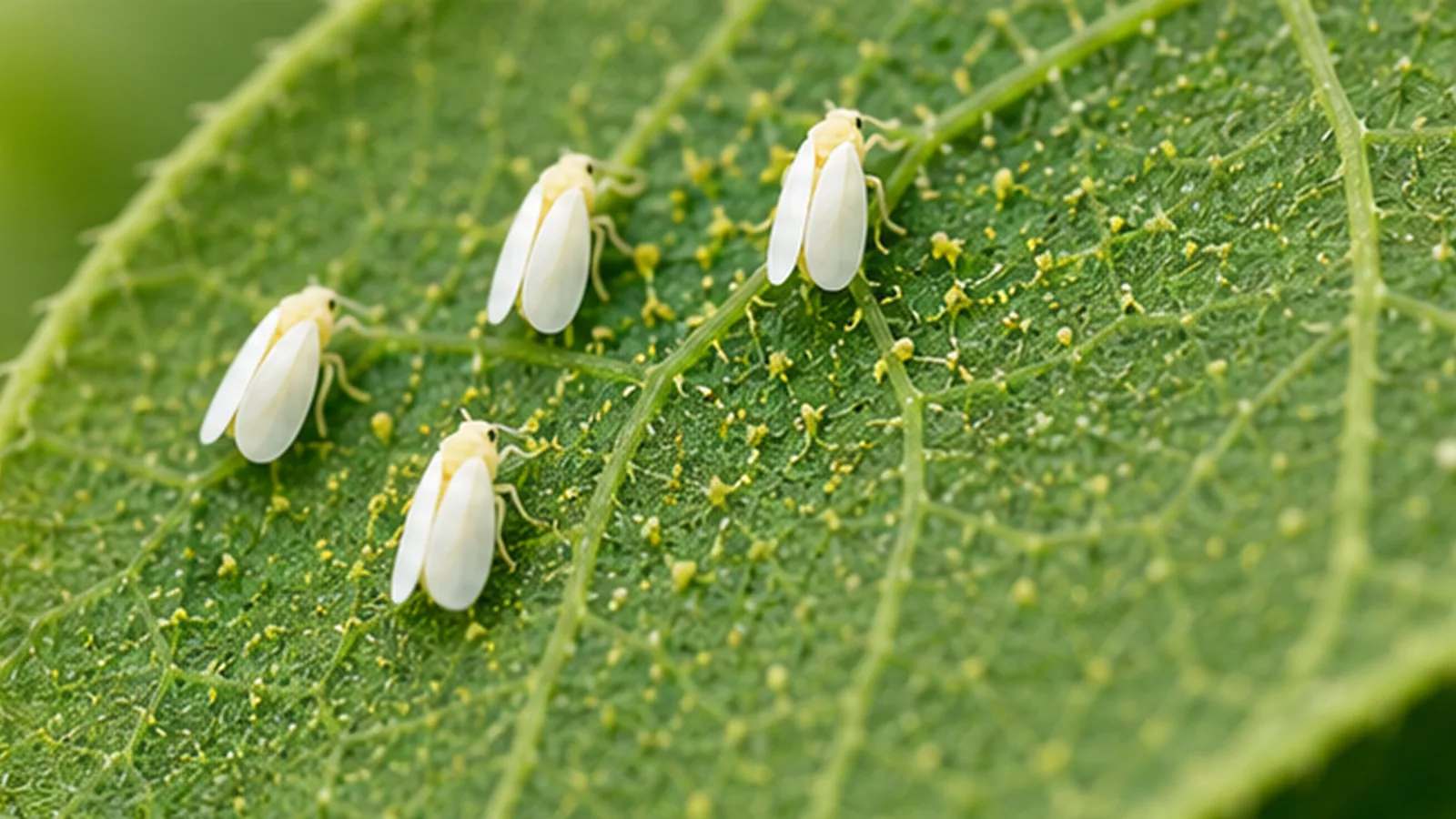
Clouds of small white insects when the canopy is disturbed, most on the underside of the upper leaves. Sticky honeydew on the leaves below, then black sooty mould growing on it, which blocks light and stains the lint.
Count in the early morning, when the adults are sluggish, on the underside of the third leaf from the top.
Managing it properly
Do not spray early for light sucking pest pressure. Use a systemic seed treatment instead, which handles the first weeks without touching the beneficials.
Rotate the mode of action, strictly. Whitefly develops resistance faster than any other cotton pest in this region, and repeated neonicotinoid use is the commonest reason a product stops working.
Yellow sticky traps for monitoring, and in numbers for some suppression.
Manage the nitrogen. A soft, dark, lush crop is a better host. Over-fertilised fields carry heavier whitefly every year.
Avoid a continuous host landscape where you can — whitefly moves between cotton, vegetables and weeds, so clean margins and staggered sowing across a neighbourhood both help.
When to spray
At threshold, roughly six to eight adults per leaf, and target the underside of the leaves with enough water to reach them. A spray that wets the top of the canopy treats almost nothing.
The disease it carries
Whitefly transmits leaf curl virus. Once a plant is infected there is no cure, which makes vector control preventive rather than curative, and makes early management the whole game.
Read the label and the leaflet on the pack before use. The approved crops, dose and waiting period printed there are what count.