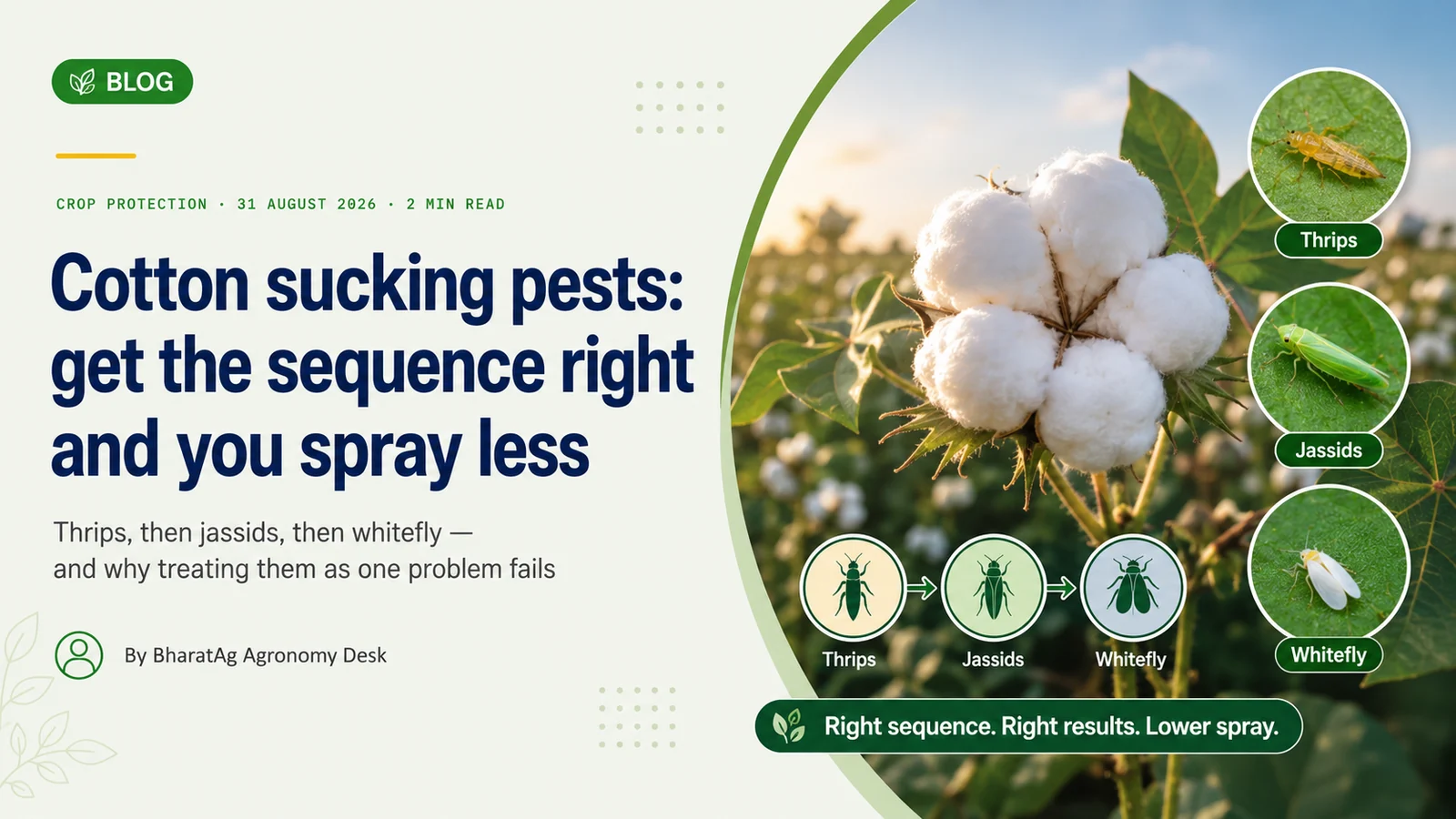
They do not arrive together
In most cotton belts the sequence is reliable: thrips first, in the first three to five weeks; jassids from about the fifth week; whitefly later, and worst in a dry spell after a wet start.
Spraying a broad-spectrum mixture at week three for all three is common and mostly wasted. Two of the three are not there yet, and the spray removes the predators that would have handled them.
Identifying each one, quickly
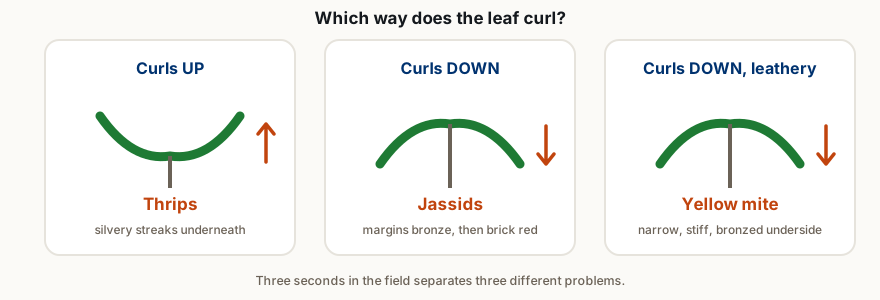
Thrips. Leaves curl upward, silvery-grey streaks on the underside, growing point stunted. Worst in dry weather and on late-sown crops.
Jassids (leafhoppers). Leaves curl downward at the margin, yellowing that turns bronze then brick red from the edge inward. Wedge-shaped green insects that move sideways when you turn the leaf.
Whitefly. Clouds of small white insects when the canopy is disturbed. Sticky honeydew, then black sooty mould on the leaves below. This one is the hardest to recover from once established.
The direction of leaf curl separates the first two in three seconds, and it is the single most useful thing to know in a cotton field.
Thresholds, not calendars
- Thrips: about 10 per leaf on the top three leaves.
- Jassids: 2 to 3 nymphs per leaf on the underside of the third leaf from the top.
- Whitefly: 6 to 8 adults per leaf, checked in the early morning while they are sluggish.
Check five plants each at five spots. It takes ten minutes and decides whether the tank is worth filling.
Choosing chemistry
For thrips and jassids at threshold, a targeted systemic does the job — neonicotinoid chemistries such as DEFENDER (dinotefuran 20%), or a selective feeding blocker such as SAFEGUARD (flonicamid 50%) which is easier on beneficials.
When more than one pest is genuinely at threshold together, a combination such as COTTONCARE (thiamethoxam + lambda-cyhalothrin) covers both sucking and chewing pressure in one pass.
For whitefly, rotate away from whatever you have been using. Whitefly develops resistance faster than any other cotton pest in this region, and repeated neonicotinoid use is the commonest reason a spray stops working.
The two things that reduce sprays more than any product
Sowing on time. Late-sown cotton carries heavier sucking pest pressure all season.
Leaving the first flush alone. Early broad-spectrum sprays kill the coccinellids, chrysopa and spiders that suppress the pests you will meet in week eight. Most whitefly outbreaks are made in week three.
Read the label. Approved crops, dose and waiting period on the pack are what count.