Boll rot
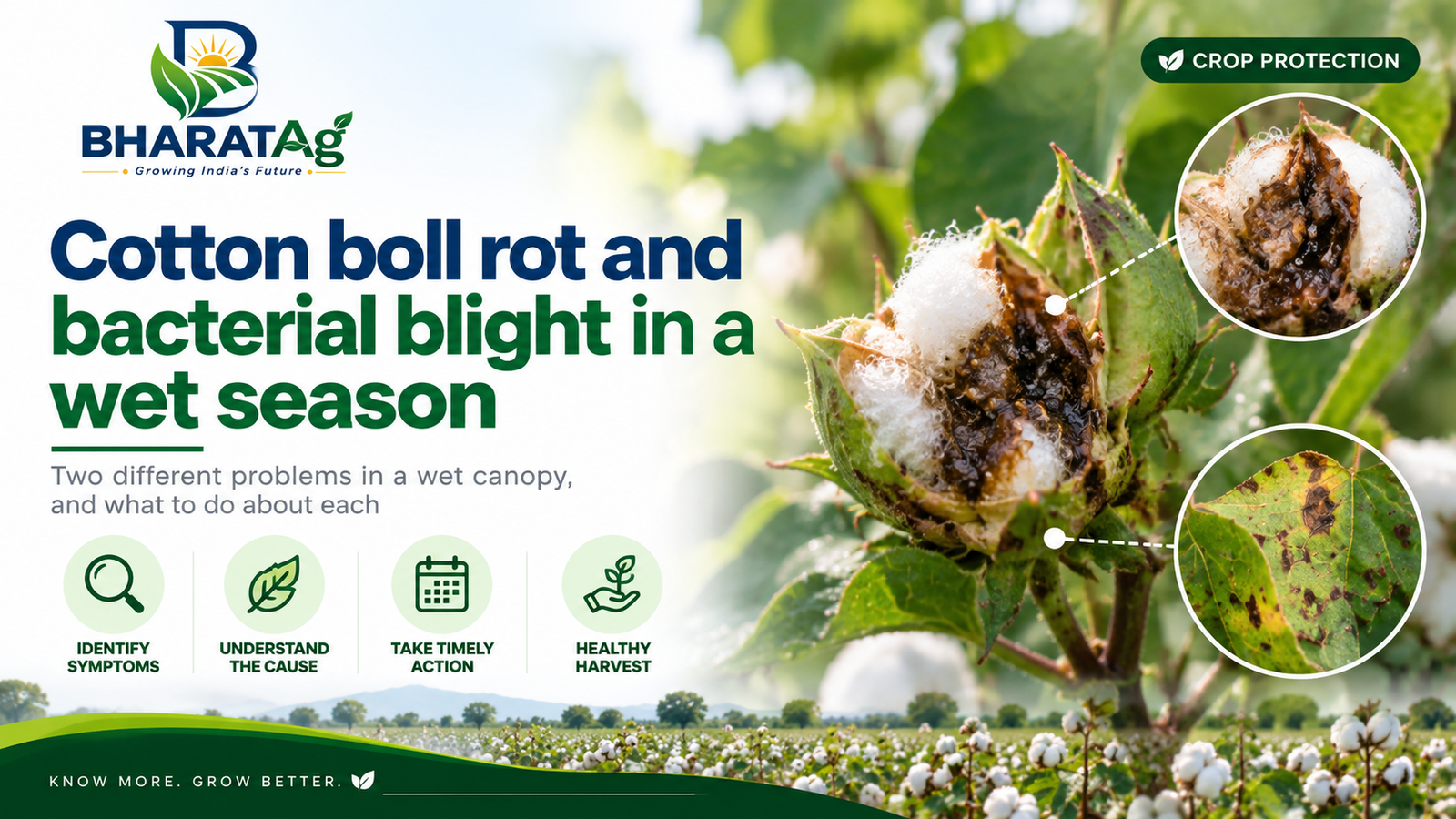
Bolls turn brown or black, often from the base or from an insect entry point, and rot before opening. Several fungi and bacteria are involved, and they get in through:
- Insect damage — bollworm entry holes and sucking pest punctures are the usual doorway.
- A dense, wet canopy that never dries.
- Rain splash carrying inoculum from the soil onto the lower bolls.
What actually helps: managing the boll-feeding insects, opening the canopy so air moves, avoiding excess nitrogen that made the canopy dense in the first place, and drainage. A fungicide on a rank, wet, insect-damaged crop is treating the last link in the chain.
Remove and destroy rotted bolls where labour allows; they are the source for the ones next to them.
Bacterial blight
Angular water-soaked spots on the leaves that stay within the veins, giving a distinctly angular outline. Black lesions on stems and petioles, and on bolls a black water-soaked patch that leads to rot.
It is a bacterium, so most fungicides do nothing. Management is:
- Resistant varieties, which is the strongest lever.
- Acid-delinted, treated seed — the disease is seed-borne and that is how it arrives in a clean field.
- Destroy infected residue after harvest; it survives there.
- Copper-based sprays as a protectant, applied before and after rain rather than on a calendar.
Alternaria and grey mildew
Both appear in the later canopy and defoliate from the bottom up. Leaf area lost during boll filling is boll weight lost. A protectant at first appearance, rotating the FRAC group, and adequate potassium — a potassium-sufficient crop resists both noticeably better.
The pattern worth seeing
Almost every disease problem in a wet cotton season traces back to a canopy that was too dense and too wet, and the canopy traces back to nitrogen and spacing. The disease programme is treating a symptom of a nutrition decision made in June.
Before the next season
Destroy the stubble and the fallen bolls. Most of these organisms overwinter in exactly that material.
Read the label and the leaflet on the pack before use. The approved crops, dose and waiting period printed there are what count.