Why it seems to appear overnight
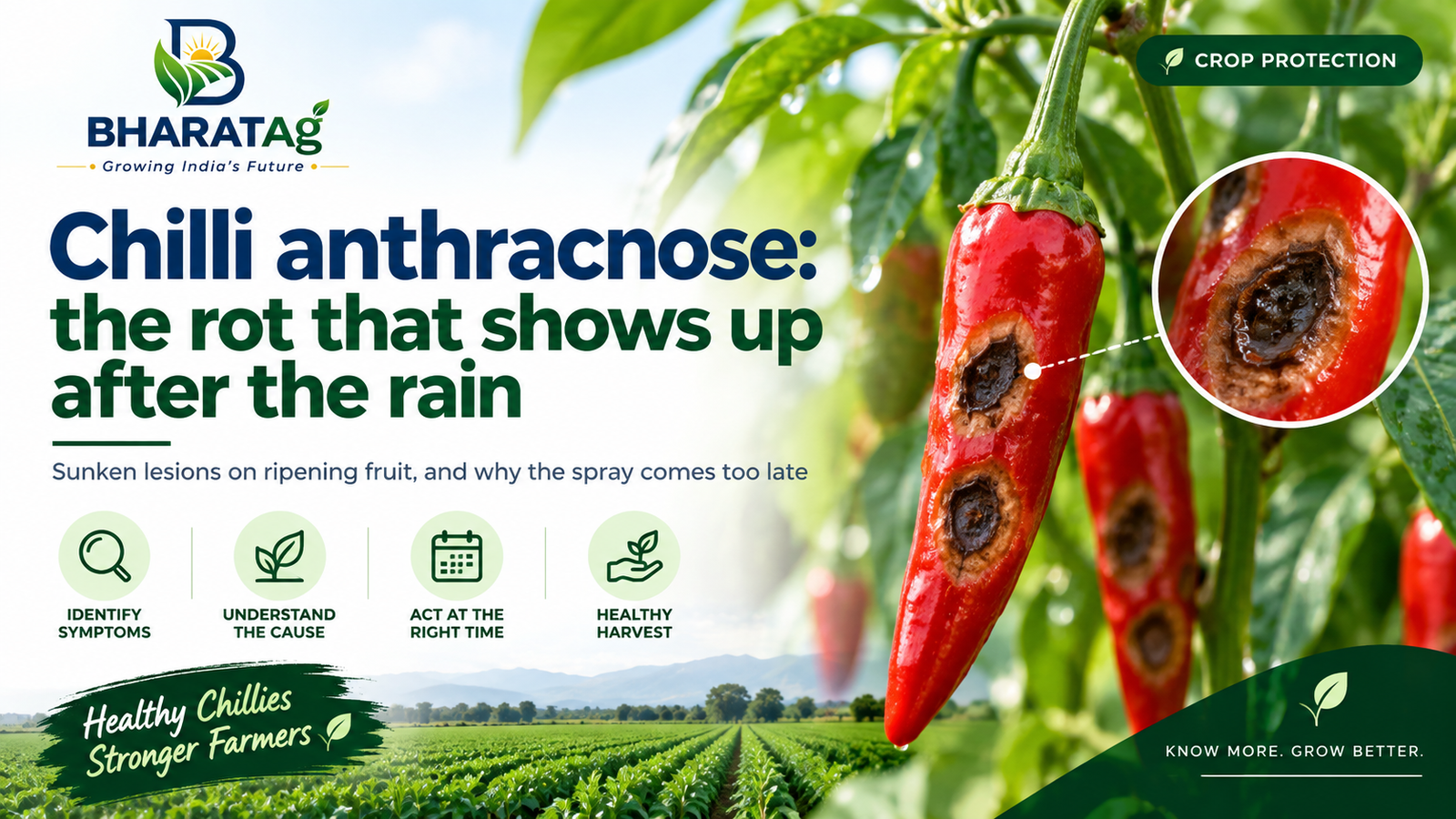
Colletotrichum infects the fruit while it is still green and then stays quiet. The fungus waits. The sunken, dark, water-soaked lesions with concentric rings appear as the fruit ripens — often after a wet spell that happened much earlier.
So a fungicide applied when you first see rotting fruit is treating infections that took place two or three weeks before. That is the whole difficulty with this disease.
Managing it before you can see it
Spray protectively through wet weather at fruit set, not reactively at ripening. Rain and prolonged leaf wetness during green fruit development is the trigger to be already covered.
Rotate the FRAC group. Anthracnose develops resistance readily and repeated use of one group is the usual reason a product stops working in a district.
Pick and destroy infected fruit, off the field. Left on the ground they produce spores for the rest of the season.
Space for airflow. A dense canopy holds moisture on the fruit for hours longer, and hours of wetness is exactly what the fungus needs.
Stake or support where the variety allows, keeping fruit off wet soil.
The seed is where it often arrives
Anthracnose is seed-borne. Treated seed from a reliable source, and seed treatment before nursery sowing, prevents introducing it into a clean field.
Drying is part of the disease programme
Fruit dried on bare ground, in a heap, or caught by rain during drying develops rot and mould after harvest that farmers attribute to the field. Dry on a clean raised surface, spread thin, turned, and covered if rain threatens.
A crop grown well and dried badly sells as a poor crop.
What it is not
Not every fruit spot is anthracnose. Sun scald gives pale, papery, bleached patches on the exposed side. Bacterial spot gives small raised scabby lesions. Mite and thrips damage gives silvery, corky russeting. Treating any of those with a fungicide achieves nothing.
Cut a lesion open: anthracnose is a soft sunken rot going into the flesh, with pinkish spore masses in humid weather.
Read the label and the leaflet on the pack before use. The approved crops, dose and waiting period printed there are what count.