It is a rabi crop and it wants to stay dry
Bengalgram is grown on residual moisture in much of its area, and that is not a limitation to be corrected. Heavy or frequent irrigation:
- encourages vegetative growth at the expense of pods,
- worsens wilt dramatically,
- causes flower drop if applied at the wrong moment.
One or two light irrigations at the critical stages — pre-flowering and pod development — beat a generous schedule. Waterlogging for even a short period on a heavy soil will kill patches outright.
Wilt again, and it is the same answer
Fusarium wilt is the main disease. Plants droop and die in patches, often at flowering.
- Tolerant variety first, and this matters more than anything else.
- Rotate. Long gaps between bengalgram crops on the same field.
- Seed treatment with a fungicide, or Trichoderma, or both in the right order.
- Sow at the right depth into a well-prepared seedbed; shallow, stressed seedlings are more susceptible.
- Do not over-irrigate.
Dry root rot appears in the same fields under moisture stress at pod fill and is often confused with wilt. Wilt is worse when wet, dry root rot when dry — the two get treated as one problem and they are not.
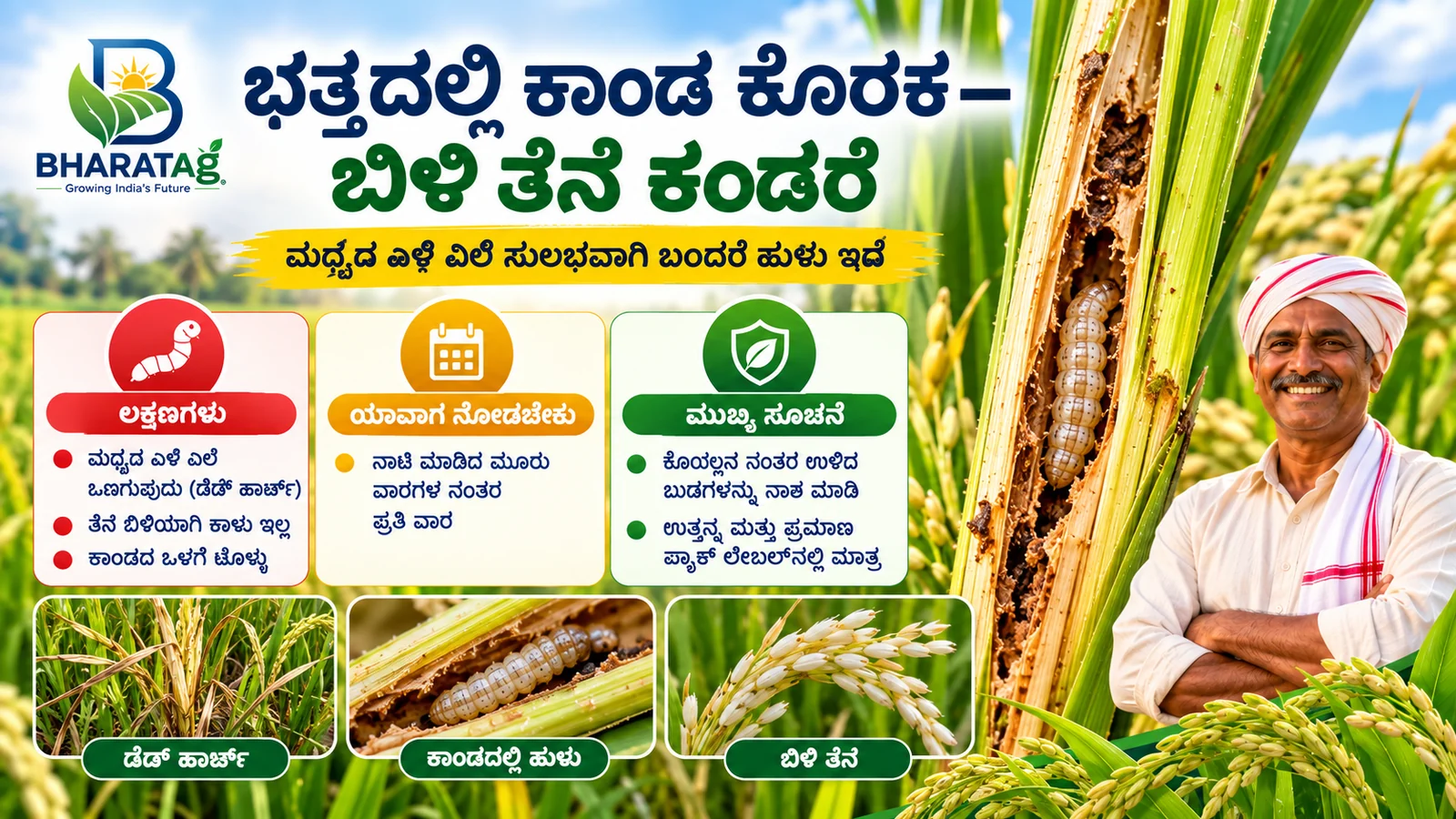
Pod borer
Helicoverpa again, and the window is flowering to pod fill.
Scout, use pheromone traps, and treat at threshold. Bird perches through the field are genuinely effective in this crop and cost nothing — birds take a large number of larvae if they have somewhere to sit.
Rotate the mode of action. NPV and neem have a real place at low pressure.
Nutrition
Rhizobium, every time — bengalgram nodulates well when inoculated and the field has not grown it recently.
A starter dose of nitrogen only. Phosphorus placed with the seed. Sulphur is commonly short and affects both yield and seed quality.
A foliar spray of a micronutrient mix at flowering is standard practice in many areas and is worth trialling on a strip before adopting it across the farm.
Sowing time decides a great deal
Sown too early into warm soil, the crop grows vegetatively and flowers into heat. Sown too late, it runs into terminal heat at pod fill. The window in any district is short, and hitting it matters more than most inputs.
Read the label for bengalgram specifically. Pulse registrations differ from cereal and cotton ones.